
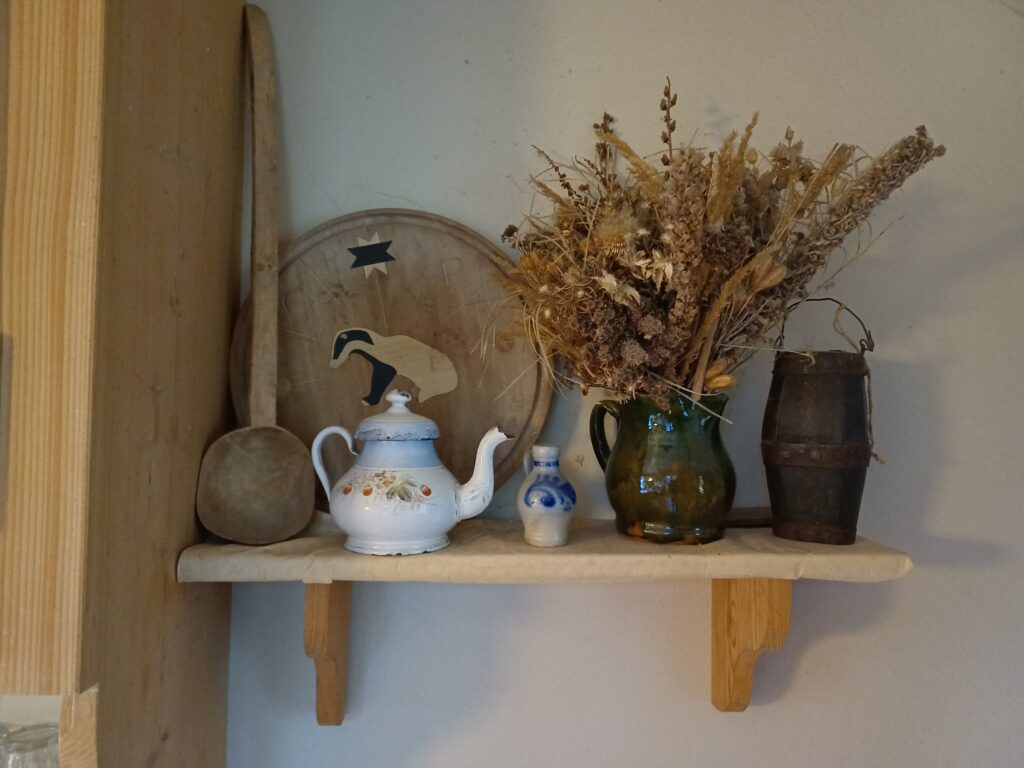
It all started with Lenin’s teapot, still standing today in my late grandparents’ house, now become a foundation. The teapot belonged to my great-great-grandmother, Sophie Mathilde Guillaume-Hainard (1855-1943), whom Lenin often visited whilst in exile in Geneva. The family has always refered to this teapot as Lenin’s teapot, but later on my aunt half-heartedly admitted that it was also Mussolini’s teapot, as Mussolini also visited Sophie’s home in Geneva.
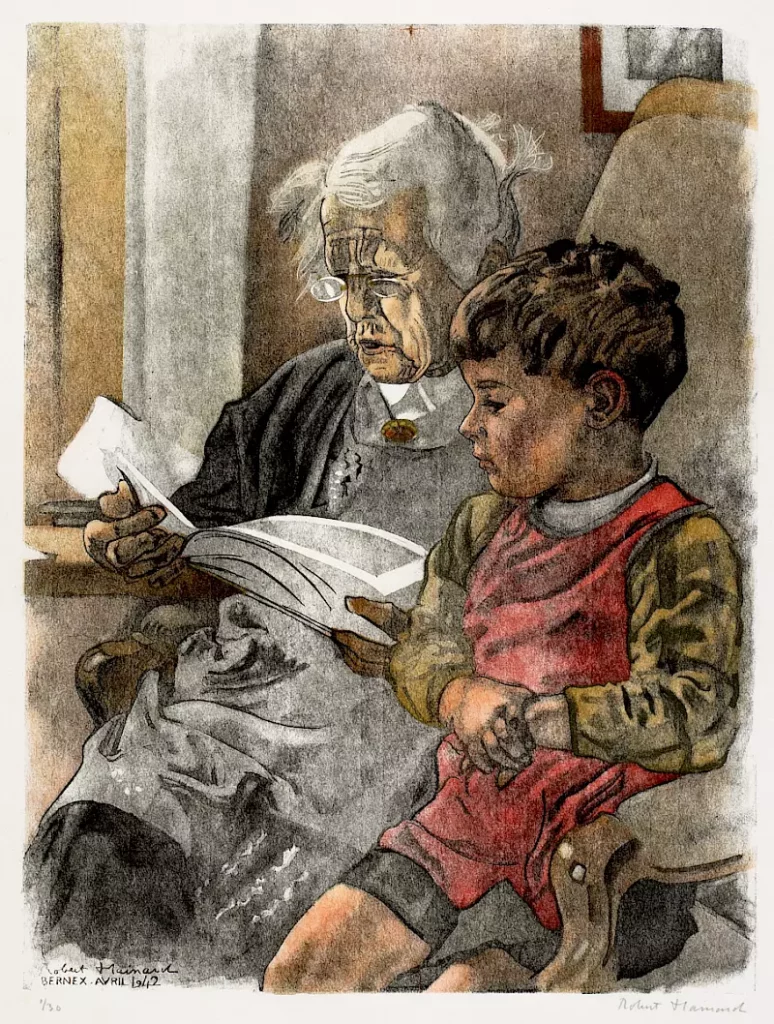
I had of course heard in the past about our “famous” ancestors, Sophie, Charles-Edouard Guillaume (1861-1938), and James Guillaume. Charles-Edouard Guillaume, Sophie’s half brother (same father, Edouard Guillaume, 1823-1898) won a Nobel Prize in Physics in 1920. Sophie and Charles-Edouard’s cousin, James Guillaume (1844-1916), was a close friend of Mikhail Bakunin (1814-1876). And one of James’ brothers, Edouard Guillaume (1850-?), shared a laboratory with Einstein in Bern. Letters from Einstein about Edouard Guillaume, not elogious, to say the least, are available on the internet.
Now the question arose as to what to do with this family history? How to present it? Should we talk about Lenin’s teapot, or Mussolini’s? Or both?
At that time, I was reading a book1 which made me finally (!!!) look into the etymology of the verb to remember (re-member), in both English and French. Indeed, in ancient French, Remembrer emanated from the latin word rememorare. Remembrer survived on its own until the 14th century ; in the 16th century, it was used concurrently with remémorer, which eventually supplanted it without reason.
Today, remembrer in French is more commonly used in the sense of bringing together scattered parts (“réunir en tout des parties dispersées“). In both English and French (ancient and modern), the act of remembering/remembrer has hence a constructive connotation.
Throughout all my travels, I have had the chance to see, visit, meet, discuss with numerous institutions, projects, individuals actively working on the topics of memory, remembering, memorials, in such a constructive manner. From these meetings came the idea of somehow linking or facilitating exchanges and dialogues between these entities. This is how “Project Re-membrer” was born.
- Naomi Klein, Doppelganger: A trip into the Mirror World, (Farrar, Straus and Giroud, 2023) ↩︎